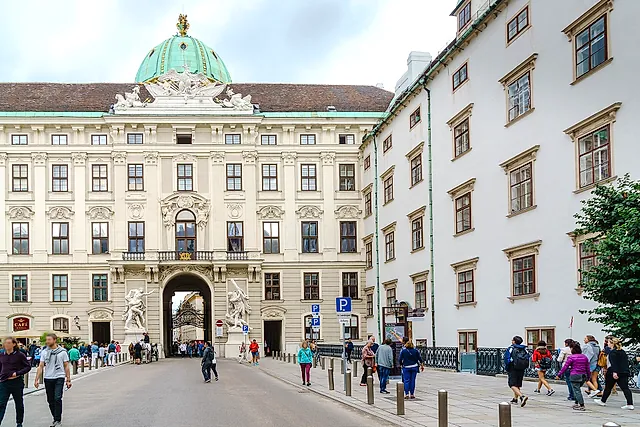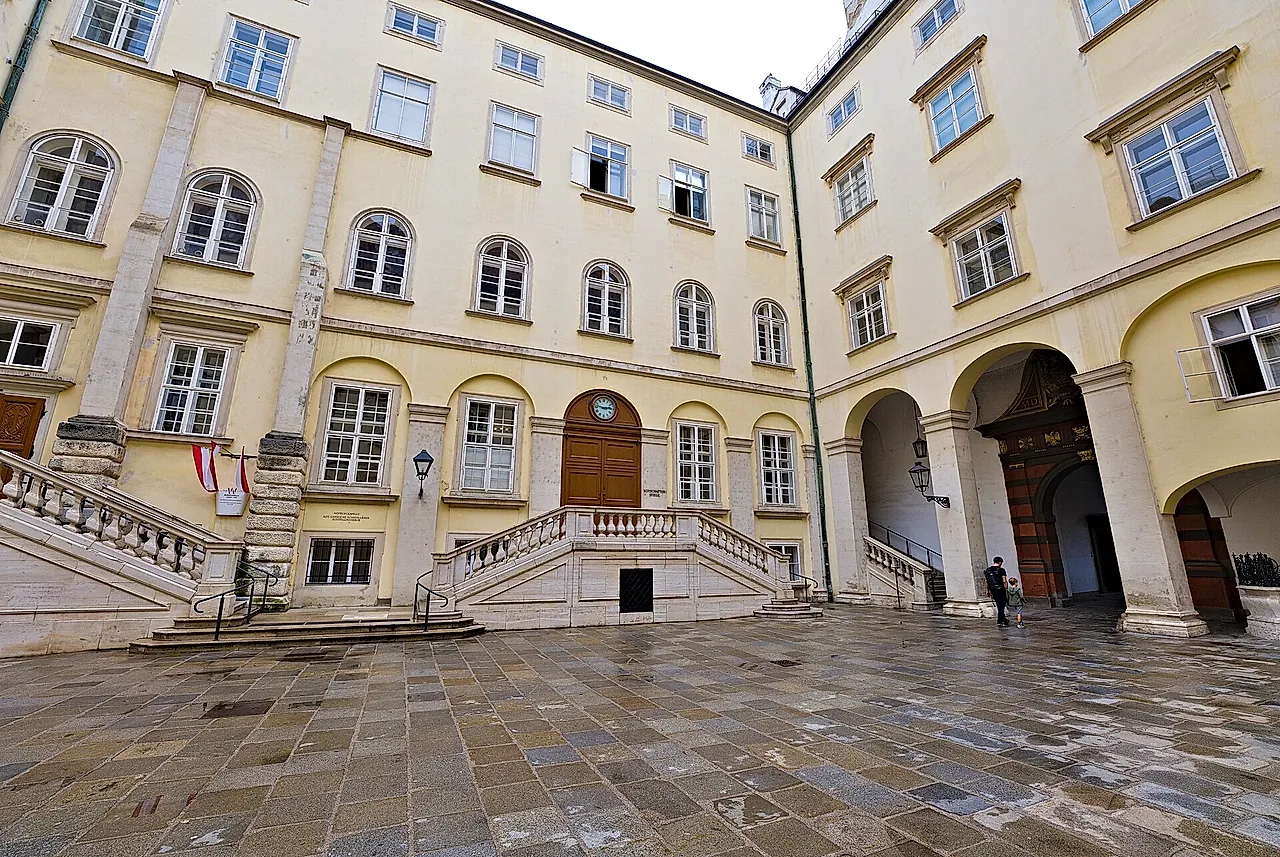
Vienna · Hofburg, Schweizerhof · Imperial crown, Habsburg treasures
Imperial Treasury Vienna: tickets, hours and highlights
The Habsburg regalia and jewels in the Hofburg: the imperial crown of the Holy Roman Empire, the Order of the Golden Fleece and, according to the museum, the only publicly accessible jewellery of Empress Elisabeth. Official prices, time slots and hours.
Today
Opening hours for every month are on the Opening hours page.
Checked against the official website on 23 October 2026 · Official source
In short
- The Imperial Treasury is part of the KHM-Museumsverband, which says its original tickets are sold on shop.khm.at and at its cash desks, and warns that unofficial websites may sell tickets that are not accepted. The price is 16 € online and 18 € at the museum, 12 € and 14 € reduced, and under 19 is free, as of 23 October 2026.
- It is open from 9:00 to 17:30 every day except Tuesday, with admission until 30 minutes before closing. A few Tuesdays are open: 8, 22 and 29 December 2026 and 5 January 2027.
- Since 1 April 2026 everyone needs a reserved time slot. The ticket is valid for one entry on the day and at the time you choose, and the length of the visit is not limited. It cannot be exchanged or refunded.
- The highlights are the imperial crown and the imperial insignia, the Holy Lance, the crown of Rudolf II, the Order of the Golden Fleece, the jewels and the Ecclesiastical Treasury. The crown can be absent while it is being conserved.
- Our partner Tiqets, a third party, sells the adult ticket at 16 €, the same as the official online price, with a mobile ticket and a time slot you choose. We could not confirm whether the museum has an agreement with Tiqets.
The imperial crown and the regalia
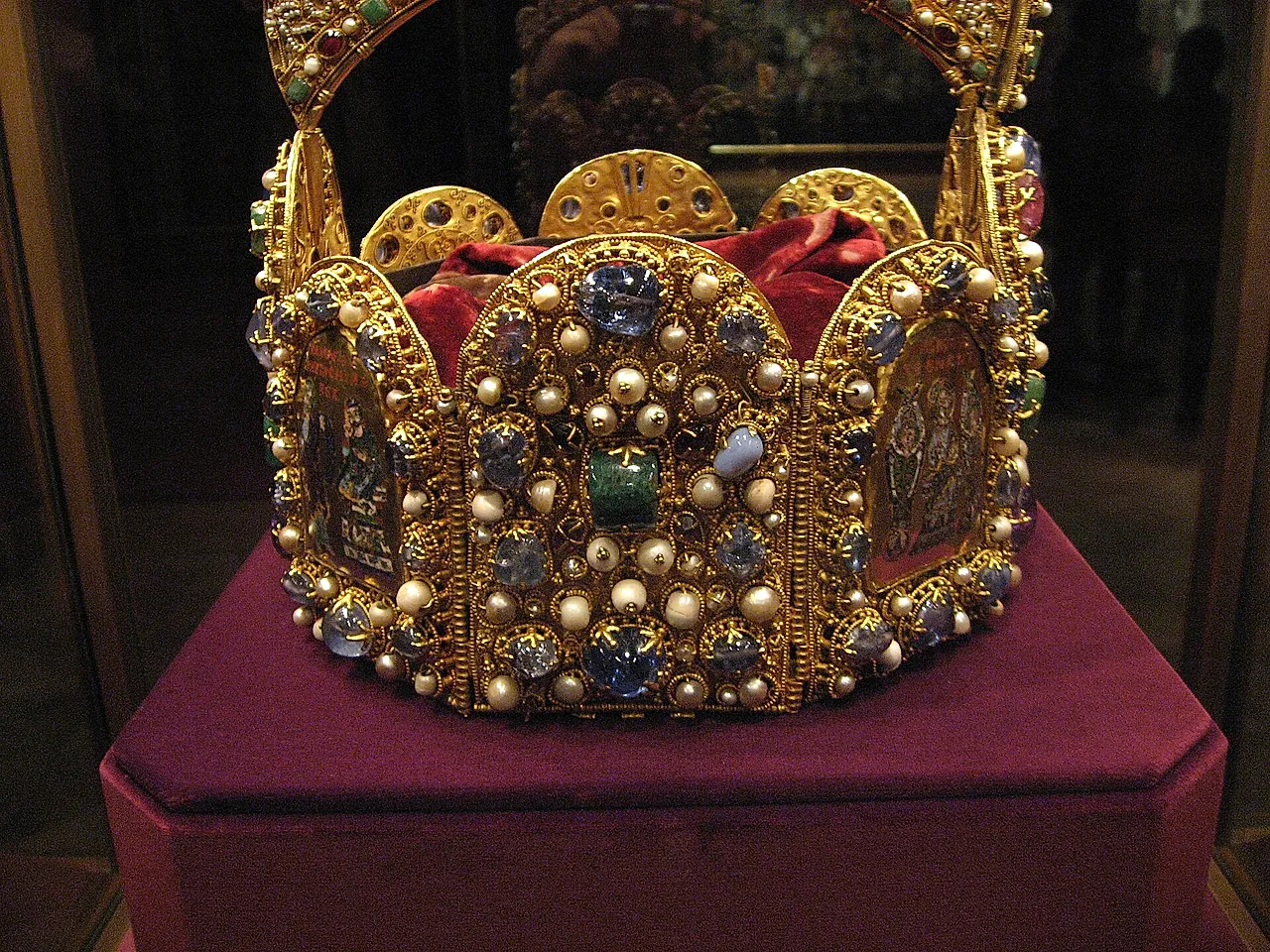
The Secular Treasury shows the imperial crown of the Holy Roman Empire, which the museum describes as over 1,000 years old, with the other imperial insignia and the Holy Lance. The museum has announced periods when the crown is removed for conservation, for example 6 to 8 May 2026, so ask before you plan a visit around it.
Baedeker’s 1911 handbook lists, in the second room, the “Insignia of the Holy Roman Empire”, with the crown dated to the 11th-12th century, the orb and the sceptres, and the so-called sabre of Charlemagne (pp. 32-33).
The crown of Rudolf II and the Habsburg insignia
The crown of Rudolf II, later the crown of the Austrian Empire, is shown with the other Habsburg insignia. Baedeker described it in 1911 as the crown of the archduchy and of the kingdoms of Bohemia and Hungary (p. 33).
The Golden Fleece, the jewels and Sisi
The collection includes vestments and objects of the Order of the Golden Fleece and jewels, among them one of the largest emeralds in the world and, according to the museum, the only publicly accessible jewellery pieces of Empress Elisabeth.
Baedeker also mentioned the famous Florentine diamond of 133⅓ carats in 1911 (pp. 32-33). We have not checked whether that stone is on display today.
The agate bowl and the “unicorn horn”
Two objects are declared inalienable heirlooms of the House of Austria: the “unicorn horn”, in fact a narwhal tusk, and a late antique agate bowl once taken for the Holy Grail. Baedeker mentioned a bowl of oriental agate, two and a half feet across, in 1911.
The Ecclesiastical Treasury
The Ecclesiastical Treasury holds relics, vestments and objects that show the devotion of the Habsburgs up to the Counter-Reformation. Baedeker listed pontifical vestments, reliquaries and the veil of St Veronica (p. 32).
Baedeker also noted that the treasure was fitted up in five rooms with walnut panelling under Maria Theresa in 1747. The rooms have been rearranged since, so use his description as history, not as a map.